Side-Eye vs. Soft Life: The Generational Meme War Nobody Asked For (But Everyone Needed)
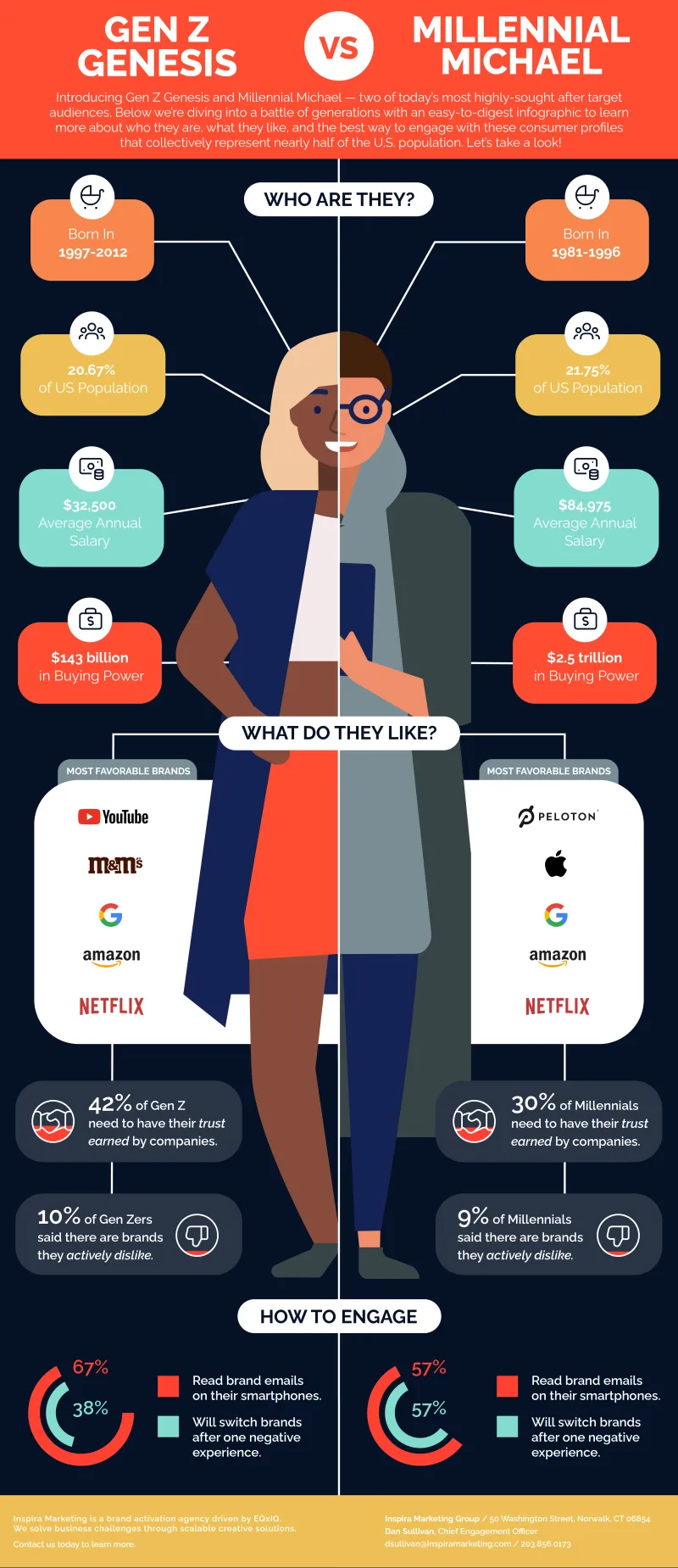
Photo: millennials and gen z laughing together looking at phones, via blog.inspiramarketing.com
Let's set the scene. A millennial opens TikTok and encounters a meme that references a 2009 Tumblr post, a Vine that technically no longer exists, and the emotional wreckage of paying $1,200 a month to live in a 400-square-foot apartment. They feel deeply seen. They share it immediately.
A Gen Z person opens the same app and encounters an image of a poorly drawn frog doing something that makes no logical sense, paired with text that reads: "me when the concept of Tuesday." They feel deeply seen. They share it immediately.
This is the generational meme divide in a nutshell — two groups processing wildly different life experiences through wildly different comedic languages, and somehow both landing on humor as the answer to the existential dread of modern American adulthood. Respect, honestly.
The Millennial Playbook: Irony as a Survival Skill
Millennials — broadly, people born between 1981 and 1996 — came of age in a specific cultural moment that shaped their entire comedic DNA. They grew up on The Simpsons and Seinfeld, absorbed the ironic detachment of early 2000s internet culture, and then graduated directly into a recession that ate their career prospects for breakfast.
The result? A generation that learned to weaponize nostalgia and irony as a coping mechanism so effective it basically became a personality type.
Millennial humor is built on the assumption that you've been through it — the shared references, the shared disappointments, the shared memory of AIM away messages and flip phones and being told that a college degree was basically a golden ticket. When that ticket turned out to be more of a participation ribbon, millennials did what they do best: made extremely relatable memes about student loan debt and called it content.
The nostalgic reference is the cornerstone of millennial comedy. Drop a SpongeBob screenshot, a Lizzie McGuire callback, or literally anything involving the word "Vine" into a millennial group chat and watch the dopamine hit land in real time. These references aren't just jokes — they're handshakes. Proof that you were there, that you remember, that you too survived the cultural landscape of 2004.
The Gen Z Playbook: When the Joke Is That There Is No Joke
Gen Z — born roughly 1997 to 2012 — grew up in a different kind of chaos. They didn't experience the internet as a novelty; they were born inside it. They came of age during climate anxiety, a pandemic, and the algorithmic acceleration of every cultural trend to the point where nothing stays funny for more than 72 hours before becoming cringe.
So they adapted. Gen Z humor is, at its core, a rejection of the idea that humor has to make sense.
Absurdist memes. Anti-jokes. Non-sequiturs that function as punchlines. The comedy of Gen Z often operates on a frequency that older generations can't quite tune into — not because it's too sophisticated, but because it's specifically designed to resist easy interpretation. If a joke can be explained, it can be criticized. If it can be criticized, it stops being funny. Solution: make jokes that exist outside the realm of logical critique entirely.
"Begging the concept of Wednesday" is funny because it shouldn't be funny. The humor lives in the gap between the meaninglessness of the statement and the deeply felt emotional truth it somehow still conveys. It's comedy as a vibe, not a punchline — and it's genuinely brilliant, even if your millennial coworker is staring at it with their head tilted like a confused golden retriever.
Why Both Styles Are Actually About the Same Thing
Here's where this stops being a roast and starts being a little bit poignant — bear with us.
Both millennial and Gen Z humor are, at their core, about processing a version of adulthood that wasn't supposed to look like this. Millennials were promised stability and got a gig economy. Gen Z was handed a world already on fire and told to figure it out. Comedy isn't just entertainment for either group — it's infrastructure. It's how you build community with people who get it, and how you survive the parts that are genuinely hard.
The millennial who posts "me: I'm fine. my bank account:" is doing the same emotional work as the Gen Z person who posts a surrealist meme about the void. They're both saying: this is difficult, I'm not alone, and laughing about it is the only thing keeping me sane right now.
Different dialects. Same language.
The Meme as Identity Badge
What's particularly fascinating — from a purely comedic-anthropology standpoint, which is absolutely a real field that we just invented — is how generational memes have evolved into identity markers. Sharing a specific kind of meme signals your membership in a cultural cohort as clearly as any demographic survey.
Millennials who post The Office reaction GIFs are announcing something about themselves. Gen Z people who use "no thoughts, head empty" as a sincere emotional descriptor are also announcing something about themselves. These aren't just jokes — they're flags planted in the digital landscape saying I am a specific kind of person and I am looking for my people.
In an internet that has become increasingly fragmented — where the algorithm serves everyone a different version of reality — generational humor is one of the last forms of broadly shared cultural shorthand. It's a connective tissue for people who otherwise might never cross paths.
The Part Where Both Generations Agree
For all the discourse about which generation is funnier (and there is so much discourse), it's worth noting the things both cohorts agree on:
- Boomers texting in all caps is universally hilarious.
- Corporate brands attempting to use meme formats is a crime against comedy.
- The economy is bad and that's definitely funny now because what else are you going to do.
- Gen Alpha is going to make everyone feel extremely old and confused, and that day is coming faster than any of us are ready for.
That last point, in particular, is uniting millennials and Gen Z in a rare moment of cross-generational solidarity. Nothing bonds two groups like the shared existential horror of watching a ten-year-old use references you've never heard of.
The Verdict
Millennial humor is a warm hug from a shared past. Gen Z humor is a chaotic fever dream that somehow makes you feel less alone. Neither is objectively funnier — they're just fluent in different kinds of absurdity, shaped by different kinds of pain, and expressed through different kinds of memes.
The real punchline? Both generations are out here laughing their way through adulthood, one relatable post at a time. And if that's not the most human thing imaginable, we don't know what is.
Now if you'll excuse us, we need to go lie down and think about the concept of Thursday.